Musical instruments and Eurovision have always shared a fascinating relationship.From the very first contest in 1956 until 1998, every performance was accompanied by a live orchestra, bringing a rich, authentic musical atmosphere to the stage.
That changed in 1999, when the orchestra was officially dropped and the entries were allowed to use pre-recorded backing tracks. Since then, the only truly live element on stage has been the vocals. But what happened to the instruments?
Well, they never really left. Although instruments can no longer be plugged in and played live (mainly due to strict timing and technical constraints), they still play a huge role visually. Artists continue to bring them on stage to enhance storytelling, create iconic moments, and sometimes even boost their chances of success.
Let’s take a tour through some of Eurovision’s most memorable instruments.
Violin – A Winning Classic
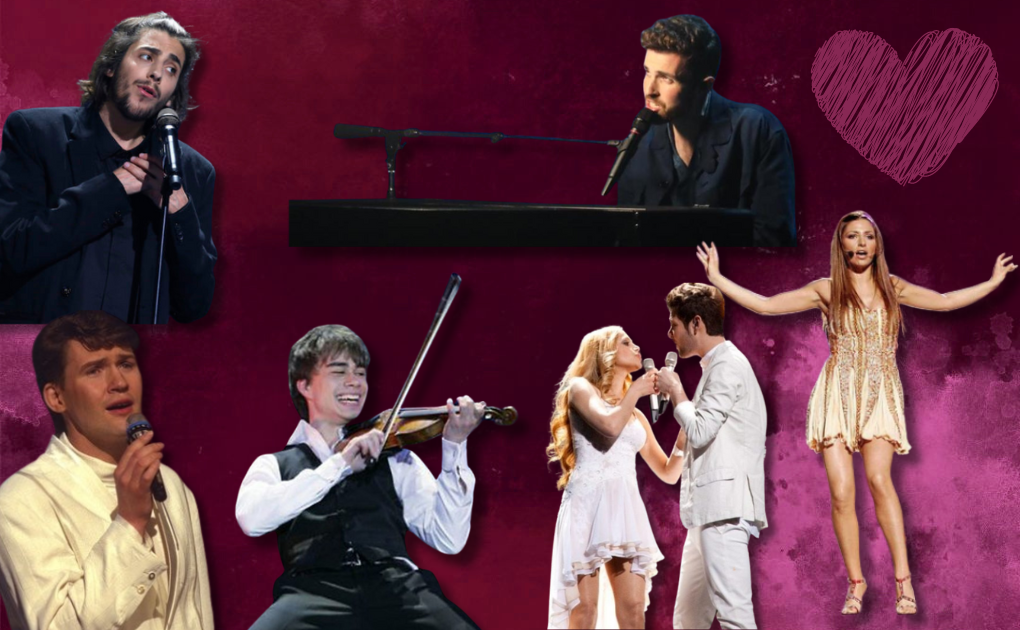
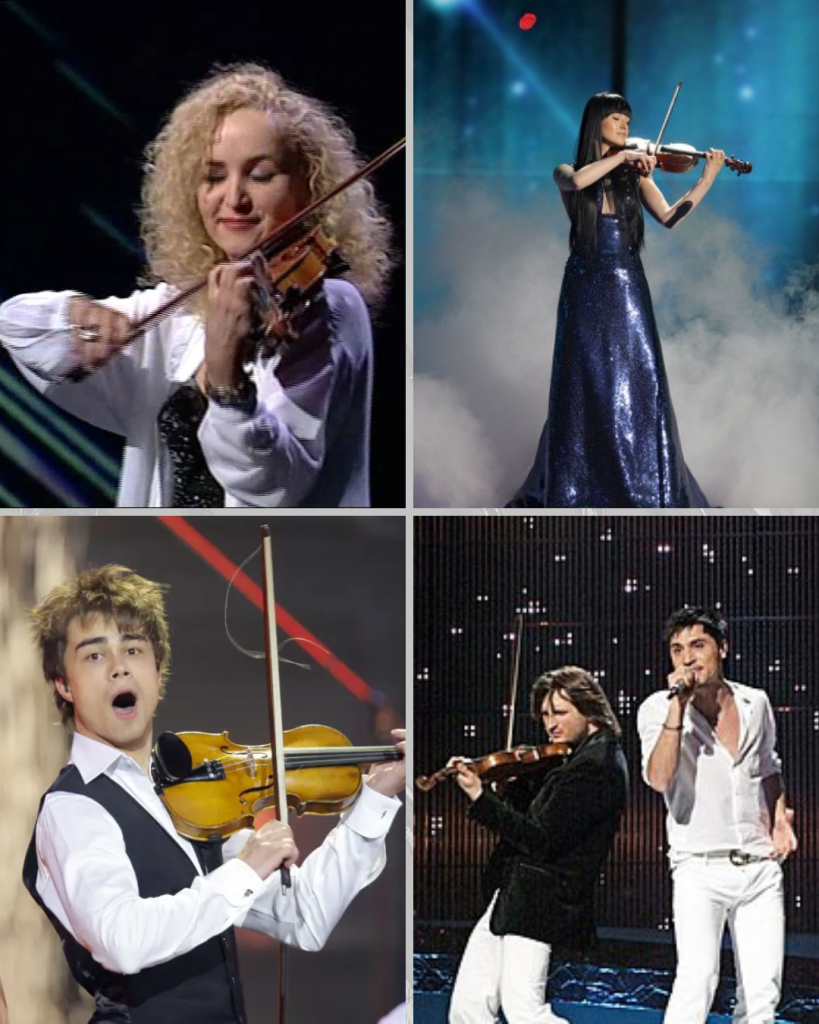
Violin has a rich history in the contest, closely tied to success. Norway has struck gold with strings. In 1995 they won with Secret Garden and their atmospheric piece ‘Nocturne’. And in 2009, a Norwegian man with his violin charmed all of Europe with his song ‘ Fairytale’. Alexander Rybak’s performance didn’t just win, it became one of the most beloved Eurovision entries ever.
Other standout violin moments include Estonia’s Urban Symphony with ‘Rändajad’ (6th place in 2009) and Dima Bilan’s winning performance of ‘Believe’ in 2008, which also featured a violinist on stage.
Saxophone – The meme that took over the internet
If one instrument broke the Eurovision bubble and went global, it’s the saxophone.
Enter Moldova’s SunStroke Project and their legendary saxophonist Sergey Stepanov. During their 2010 performance of ‘Run Away‘, his now-iconic dance created the viral phenomenon known as the “Epic Sax Guy.”
They returned in 2017 with ‘Hey Mama‘, delivering Moldova’s best result ever—3rd place—proving that saxophone power is real.
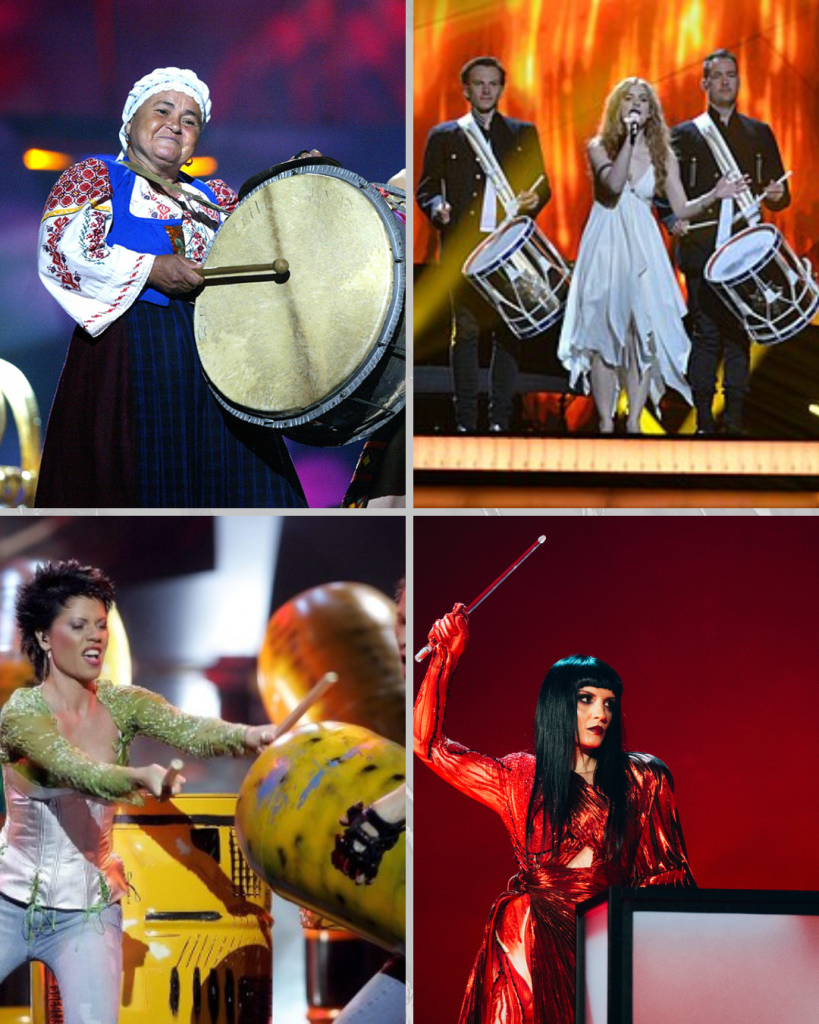
Drums – Rhythm that shakes the stage
Drums have brought raw energy and tribal intensity to Eurovision—especially from Ukraine. From Ruslana’s explosive ‘Wild Dances’ (winner in 2004) to GreenJolly in 2005, percussion has been a recurring force.
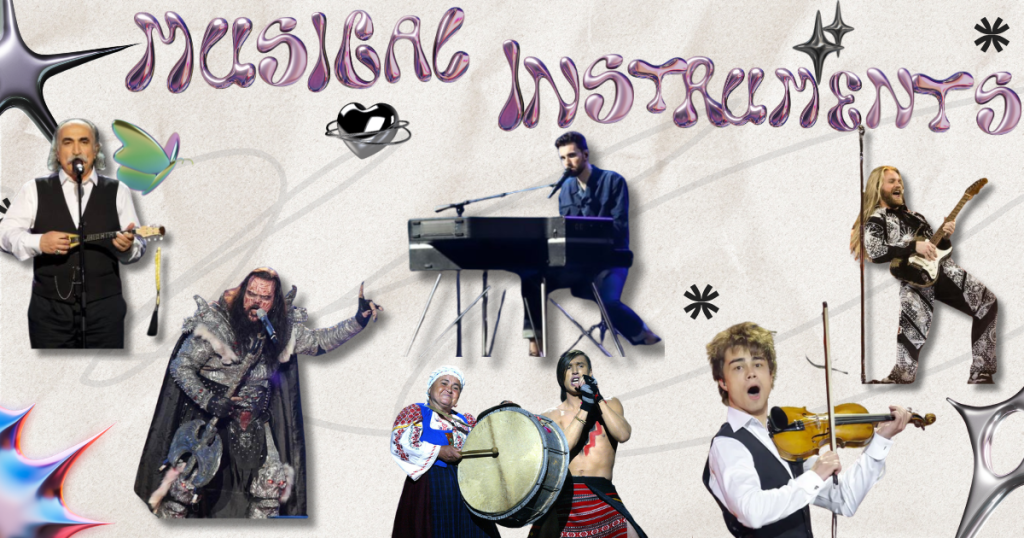
Moldova also delivered an unforgettable moment during their debut in 2005 when Zdob și Zdub featured a drumming grandmother in ‘Boonika bate doba’—a performance that finished an impressive 6th.
And let’s not forget Emmelie de Forest, whose winning song ‘Only Teardrops‘ (2013) used drums to build atmosphere and emotion.
Romania also made noise in 2005, when Luminita Anghel drummed on oil barrels during her performance of ‘Let me try‘, helping secure 3rd place, one of the country’s best results in the contest.
Folk instruments – bringing culture to the stage
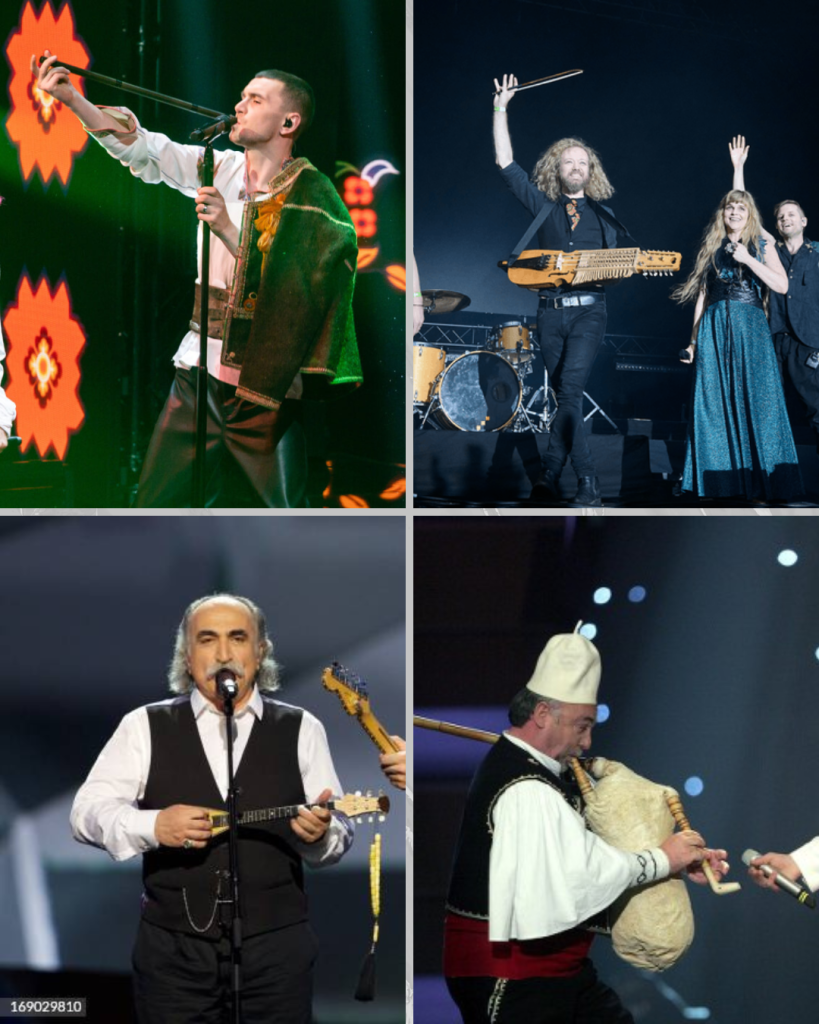
Eurovision thrives on diversity, and folk instruments are one of the best ways countries showcase their identity.
Greece’s 2013 entry ‘Alcohol Is Free’ featured Agathonas Iakovidis playing the traditional baglama, blending ska, punk, and rebetiko into one unforgettable act.
Ukraine has consistently embraced traditional sounds, using the sopilka (a Ukrainian flute) in performances by Go_A (2021) and Kalush Orchestra (2022).
Albania is also a country incorporating folk elements, with an example back in 2006 with the song ‘Zjarr e ftohtë’, adding a unique cultural layer to the performance.
Piano
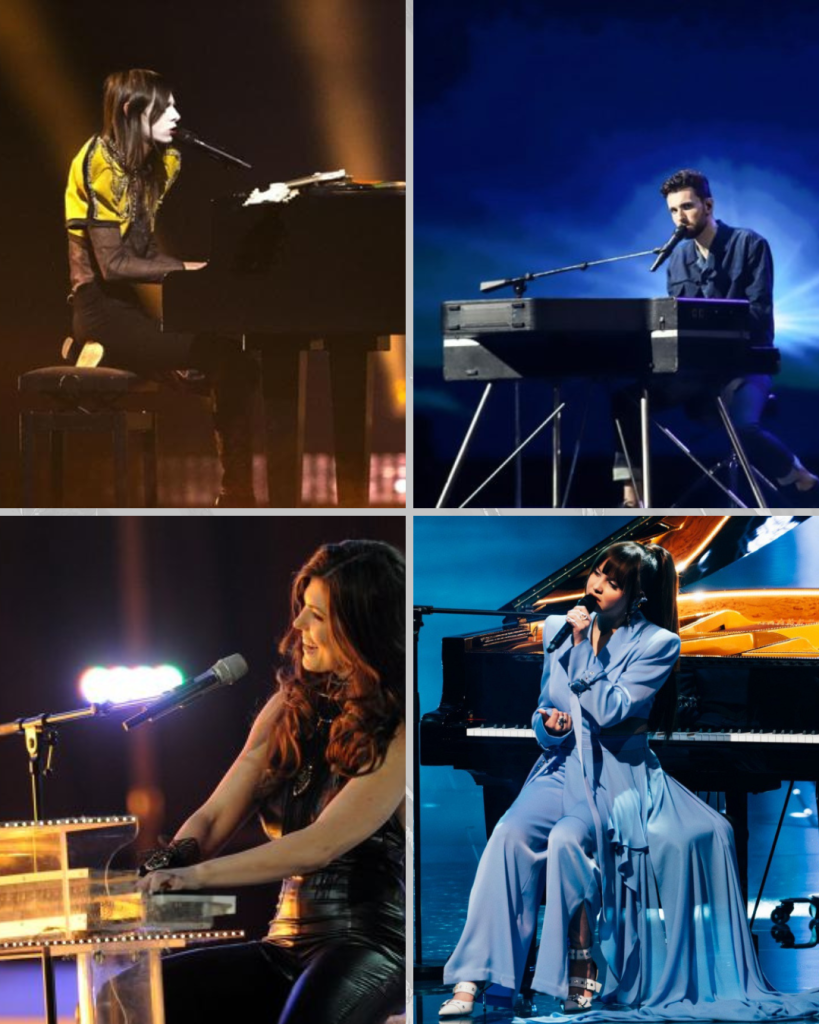
Sometimes, less is more—and nothing proves that like the piano.
Duncan Laurence won Eurovision 2019 with ‘Arcade‘, delivering a heartfelt performance centered around the piano.
Earlier, in 2010, Paula Seling & Ovi wowed audiences with their double transparent piano, which they played with fire, finishing in the impressive 3rd place. More recently, Lucio Corsi brought raw emotion to the stage with ‘Volevo essere un duro’, delivering a moving piano-led performance that earned Italy a strong 5th place finish.
The piano also played a central role in Estonia’s 2023 entry, where Alika captivated audiences with ‘Bridges‘, a powerful and vocally driven performance built around the instrument.
Guitar
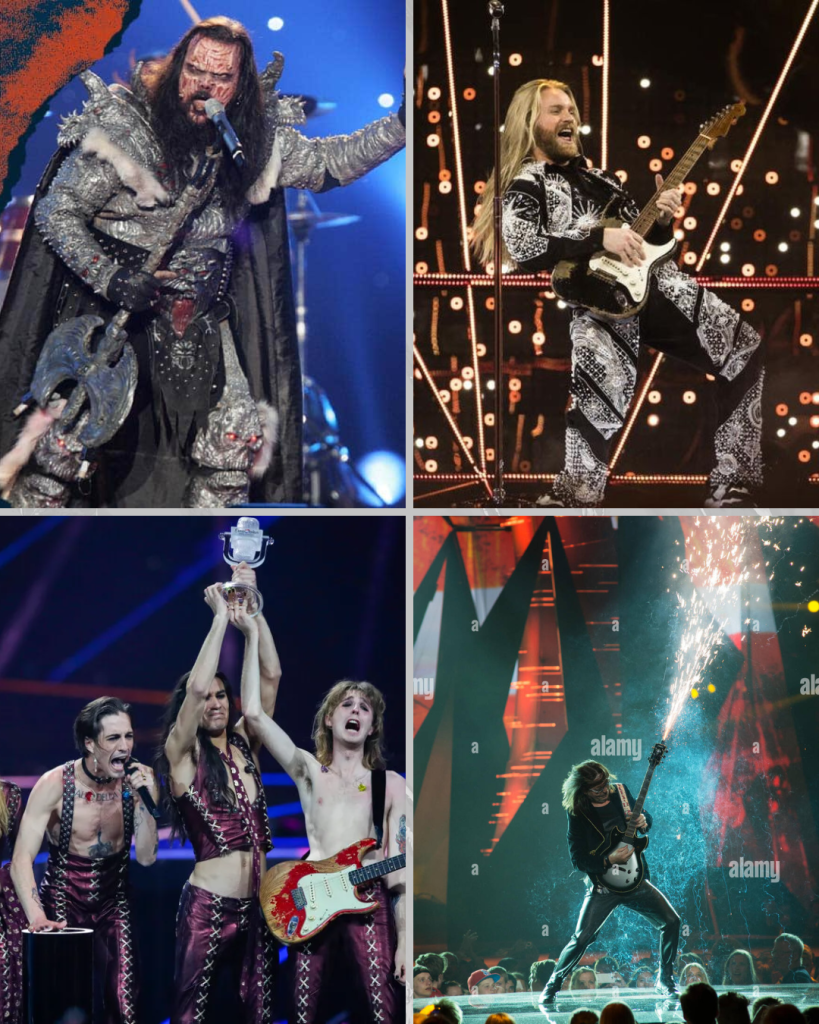
Rock has carved out its own space in Eurovision history, and guitars are at the heart of it.
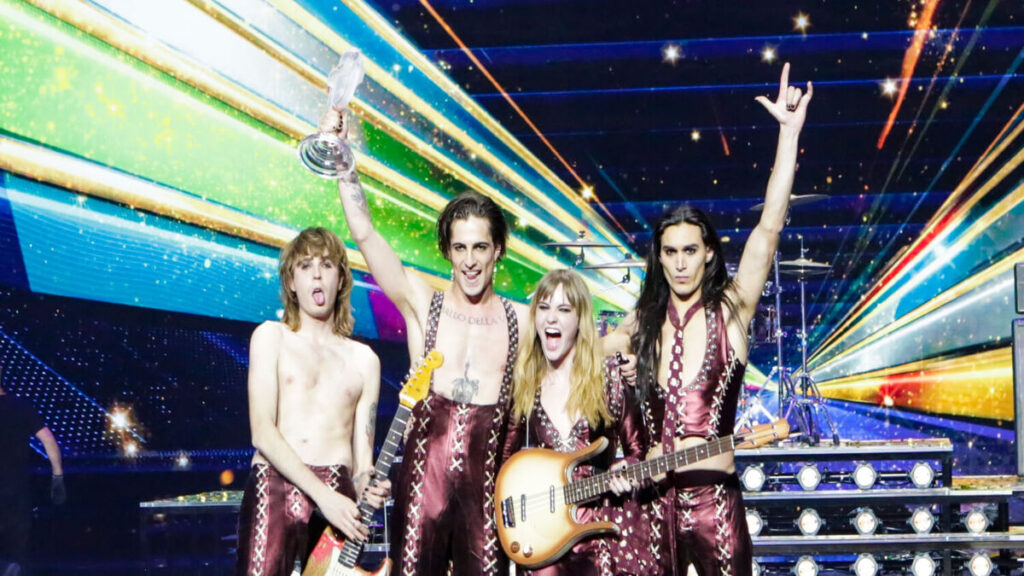
From Lordi’s monster victory in 2006 to Måneskin’s global success after winning in 2021, guitars have powered some of the contest’s most electrifying moments.
Bands like Blind Channel and maNga brought high-energy performances, while artists like Sam Ryder used electric guitar elements to elevate songs like ‘Space Man‘.
And who could forget Bledar Sejko’s flaming guitar solo in Albania’s 2013 entry ‘Identitet?’ Pure Eurovision drama.
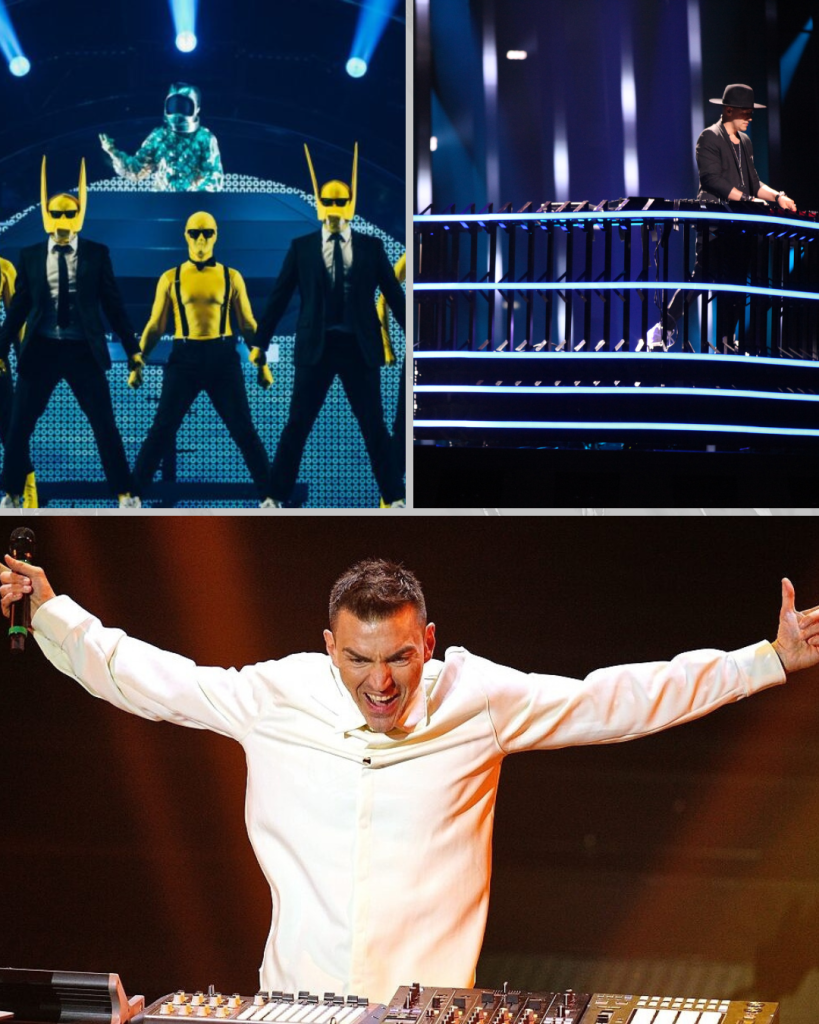
DJ – Modern Eurovision Energy
While not as visually “instrumental” in the traditional sense, DJs have become more present in recent Eurovision performances, reflecting modern music trends.
Countries like Norway, Poland, and San Marino have embraced DJ elements on stage—bringing club vibes, electronic beats, and a different kind of performance energy to the contest.
Even without being played live, instruments remain a powerful part of Eurovision storytelling. They add emotion, authenticity, and unforgettable visuals—sometimes even stealing the spotlight.
Because in Eurovision, it’s not just about what you hear… it’s about what you see and feel. Which is your favourite musical instrument moment in the contest? Let us know!